

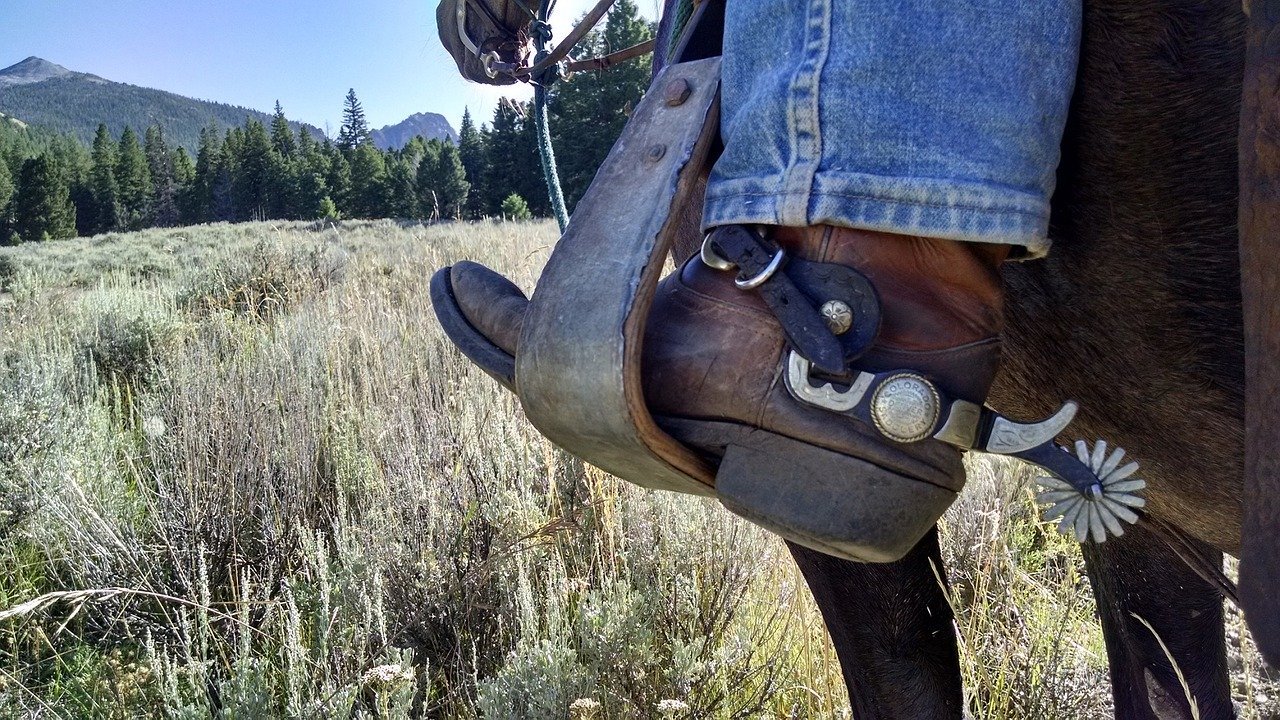
TRUE OR FALSE: For the first several thousand years that humans rode horses—in war or otherwise, right up until about 300 AD—they did it without benefit of stirrups.
T / F
Please scroll down for the answer.
…
Keep scrolling.
…
Just a bit more…
…
Almost there…
…
(Honest! Keep going.)
…
ANSWER: It’s true. Today, stirrups are a given on virtually all types of saddles, but the first real stirrups weren’t developed until probably around the 4th century AD in China, from where they then spread westward. Stirrups began to be used in Europe sometime after the fall of the Roman Empire late in the 5th century.
Products we feature have been selected by our editorial staff. If you make a purchase using the links included, we may earn a commission. For more information click here.
A precursor to the stirrup appeared in India around 100 BC. It was a mounting aid consisting of a small loop of rope—a sort of “toe stirrup” on the near, or left, side of the saddle only. Indeed, the word “stirrup” stems from the Old English “stige-rap” or, roughly, “mounting rope.”
[RELATED: How to avoid ever getting hung up in a stirrup.]
LIKE TRIVIA? Sign up for The Ride, Horse&Rider’s free newsletter, which brings you educational trivia questions (plus a wealth of other great information) weekly, as well as daily tips and just-for-fun trivia questions.